Our brains crave patterns and breathing room. White space lowers cognitive load, making content easier to scan, understand, and remember. When you remove visual clutter, every remaining element gains meaning. Share how whitespace changed your reading or note-taking habits, and invite others to try it this week.
Typography That Breathes
Aim for 45 to 75 characters per line with generous line spacing to prevent visual fatigue. Slightly increasing leading opens reading lanes, letting eyes glide from left to right. Test two versions side by side and comment which flow feels calmer, clearer, and more inviting to read.
Align text and elements to a baseline grid so headings, body copy, and images snap into visual harmony. Consistent rhythm builds trust and reduces scanning fatigue. Readers subconsciously feel the order. Try this in a document and tell us if your team notices smoother flow.
The 8-Point Spacing System
Adopting an 8-point scale for margins, padding, and gaps speeds decisions and unifies interfaces. Instead of debating pixels, you pick 8, 16, or 24 and move forward. Share your spacing tokens in the comments so others can adopt and improve them for their own projects.
Gutters That Guide the Eye
Generous gutters between columns prevent text collisions and give images room to resonate. Imagine a magazine layout where each column respects its neighbor. Try widening gutters slightly in your reports, then ask readers whether scanning columns feels more relaxed and better organized.
Documents, Notes, and Email
From Dense Memo to Crisp Brief
Rewrite a crowded memo by adding headings, short paragraphs, and calm margins. Use spacing to separate context, decision, and next steps. Readers appreciate clarity and urgency without clutter. Post your transformed version and invite peers to vote on which parts felt most organized and persuasive.
Meeting Notes That People Actually Read
Structure notes with a summary, decisions, and owners—each separated by whitespace bands. A quick glance reveals what matters now. Your future self will thank you. Encourage your team to follow the same format and share how it improved follow-through and reduced confusion after meetings.
Emails with a Single Clear Call to Action
Surround your main button or link with generous padding and short, supportive copy. Removing nearby distractions increases clicks and confidence. Ask subscribers if the message felt calmer and clearer, and track responses to see how white space influences engagement and prompt decision-making.
Interfaces and Dashboards
Encapsulate related metrics in cards with consistent padding so categories are visually distinct. White space becomes a gentle border that guides interpretation. Invite users to test two dashboards—one dense and one spacious—and report which enables faster insights and more confident actions.
Interfaces and Dashboards
On mobile, spacing around buttons prevents accidental taps and hesitation. Increase padding and inter-item gaps to reduce errors and enhance comfort. Ask your audience to share accessibility wins after widening touch areas and adding white space around critical interactive elements across devices.
Room on the Calendar
Protect buffers between meetings. That temporal white space enables reflection and preparation, which improves outcomes and reduces stress. Try scheduling a 10-minute margin after key sessions, then report whether decisions improved and follow-ups became clearer because you finally had space to think.
Decluttered Desk, Clearer Mind
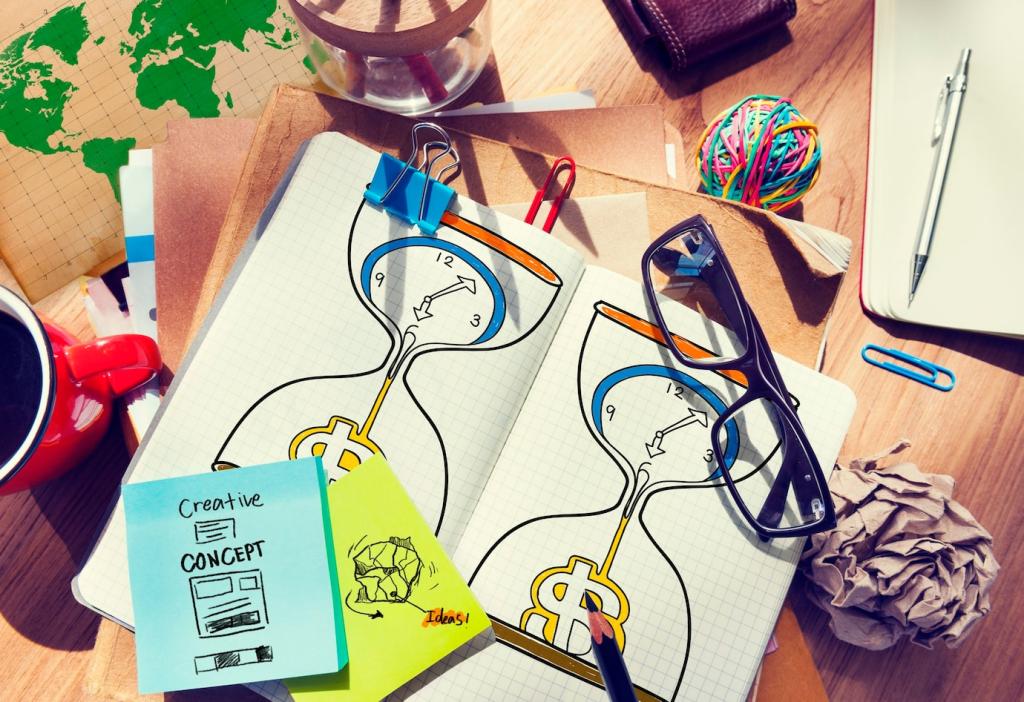
A tidy desk is visual white space. Fewer items demand attention, so your priorities shine. Remove one pile today and keep only what serves the task at hand. Share a photo of your simplified setup and explain how it changed your focus, energy, and organizational habits.
Pause Before Publish
Step away from a draft for fifteen minutes. That mental white space reveals awkward phrasing, crowded paragraphs, and bloated sections. When you return, trim and space with intention. Invite readers to try this pause, then comment on what improvements surfaced because of the deliberate break.